Petra Schmitz · 21 October 2026
Downtown Murals and Market Booths: Grovehill's Creative Scene Flourishes Amid Expansion
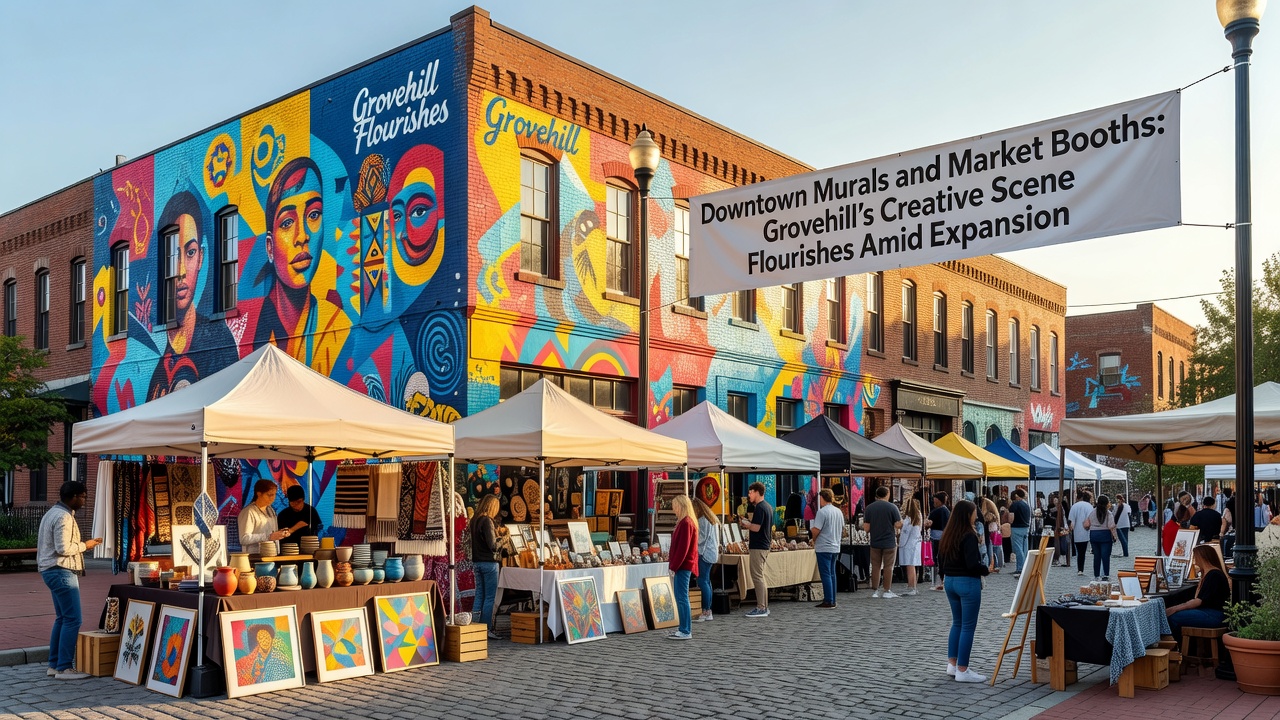
Public art installations and temporary market setups have marked downtown Grovehill for several years now, yet recent expansion projects have coincided with increased activity in both areas. City records indicate that more than 25 new murals appeared between 2023 and 2025, while market booth permits rose by 40 percent during the same period. Observers note that these developments occur alongside new residential and commercial construction along Main and Elm streets.
Mural Projects Expand Across Multiple Blocks
Artists working with the Grovehill Arts Commission have completed large-scale works on building exteriors that once stood empty, and local businesses have sponsored several pieces that reference regional history and current growth patterns. One mural on the corner of Third and Oak streets depicts the transition from agricultural land to mixed-use development, while another near the transit hub illustrates daily commuter routines updated with recent infrastructure changes. Data from the commission shows participation from 18 local artists and three visiting muralists in 2025 alone.
Funding for these projects has come through a combination of municipal grants, private donations, and matching contributions from property owners. The program requires each approved mural to remain in place for at least five years, and maintenance agreements are signed at the time of installation. Researchers at the regional planning office have tracked visitor foot traffic near completed murals, noting measurable increases during weekend hours compared with pre-installation counts.
Market Booths Adapt to Growing Foot Traffic
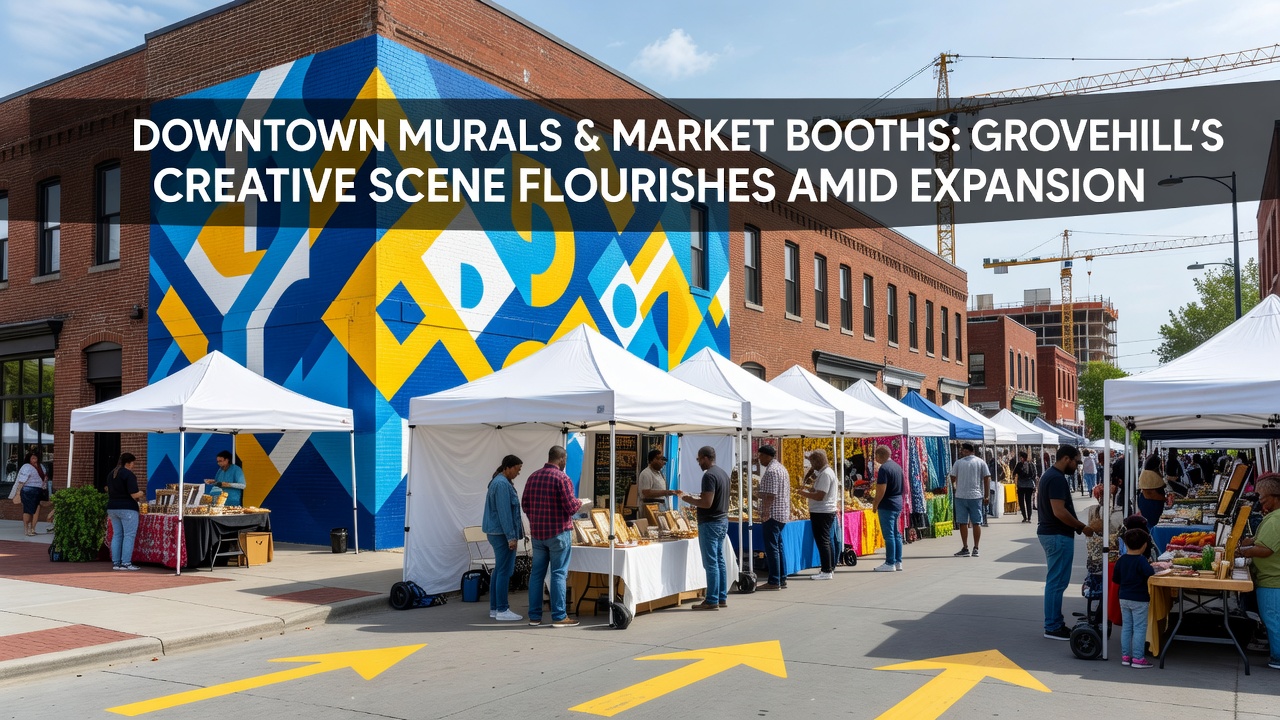
Weekend market booths operate every Saturday from April through November in designated sections of the downtown plaza, and vendors report steady demand for handmade goods, prepared foods, and seasonal produce. Permit data released by the city clerk's office lists 62 active vendors as of early 2026, up from 44 in 2024. Many booths feature locally sourced materials, and several vendors have expanded their operations to include online sales after establishing regular customers at the market.
October 2026 brings an additional three-day market event scheduled to coincide with harvest celebrations, and organizers have added extended evening hours to accommodate increased pedestrian activity from nearby construction sites. Booth layouts have been adjusted to maintain clear pathways for construction crews and residents, while still preserving space for browsing. Attendance figures from previous October events show average daily visits exceeding 3,000 people.
Integration With Ongoing Urban Expansion
Construction of new mixed-use buildings has required temporary relocation of some market spaces, yet organizers have worked with developers to identify alternative sites within two blocks of the original locations. City planners have incorporated designated art walls into building permits for several upcoming projects, ensuring continued space for murals as the downtown footprint grows. According to National Endowment for the Arts reports on creative placemaking, such coordinated approaches appear in multiple mid-sized communities experiencing similar growth.
Local business associations have documented that properties adjacent to recent murals and active market areas show higher occupancy rates than comparable blocks without these features. The pattern holds across both retail and office spaces, and lease renewal data supports the observation. Expansion plans released in 2025 include provisions for additional public art installations along the new pedestrian corridors connecting the downtown core to the transit station.
Community Participation and Artist Networks
Workshops organized by the arts commission have drawn residents interested in learning mural techniques or starting small vendor businesses, and enrollment records show consistent attendance across age groups. Several participants from earlier sessions have gone on to receive their own commissions or permits. The network extends to neighboring towns where similar programs operate, allowing for occasional artist exchanges and shared supply resources.
Figures released by the chamber of commerce indicate that creative-sector businesses now represent roughly 12 percent of downtown establishments, compared with 8 percent five years earlier. This category includes galleries, design studios, and specialty retail that often participates in market events. Expansion of broadband infrastructure has supported several of these operations by enabling online sales alongside physical booth presence.
Conclusion
Records and participation numbers show that downtown murals and market booths have expanded in parallel with broader development activity in Grovehill. City departments continue to coordinate permitting and placement to accommodate both new construction and ongoing creative programming. Future project timelines released by the planning office list additional mural sites and market space allocations through 2028.